October 26, 2026
How Emergency Dentists in Plano, TX Treat Front Tooth Injuries
By @tysonklbx377
A front tooth injury changes the mood of a day in seconds. One slip on a wet driveway, an elbow during a basketball game, a steering wheel in a low-speed collision, and suddenly the mirror shows a chipped edge, a crack, or a tooth that no longer sits where it should. Because front teeth are so visible, patients usually notice two things at once: pain and appearance. That combination creates real urgency.
An emergency dentist in Plano, TX sees this pattern often. The first priority is not cosmetic polish, even though that matters deeply to patients. It is diagnosis. Front tooth injuries range from a tiny enamel chip to trauma that affects the nerve, the root, and the supporting bone. Two teeth can look similar in a phone photo and need very different treatment once an exam and X-rays tell the full story.
The best emergency care balances speed with restraint. Treat what needs to be treated immediately, protect the tooth from further damage, control pain, and make thoughtful decisions about restoration once the dentist knows how the tooth is responding. Front teeth are unforgiving that way. They sit in the spotlight, but they also have delicate anatomy and relatively thin edges. Good outcomes depend on careful judgment, not just quick repairs.
The first few minutes matter more than most people realize
When someone injures a front tooth, the condition of the tooth in the first hour can influence what is possible later. A tooth that is simply chipped may need nothing more than smoothing or bonding. A tooth that has been knocked loose or displaced needs attention fast because the ligament around the root begins reacting immediately. A tooth that has been completely knocked out has the narrowest window of all.
Before the patient even reaches the office, home care can make a real difference:
- Rinse the mouth gently with water to clear blood and debris.
- Apply light pressure with clean gauze if the lip or gum is bleeding.
- Use a cold compress on the outside of the face for swelling.
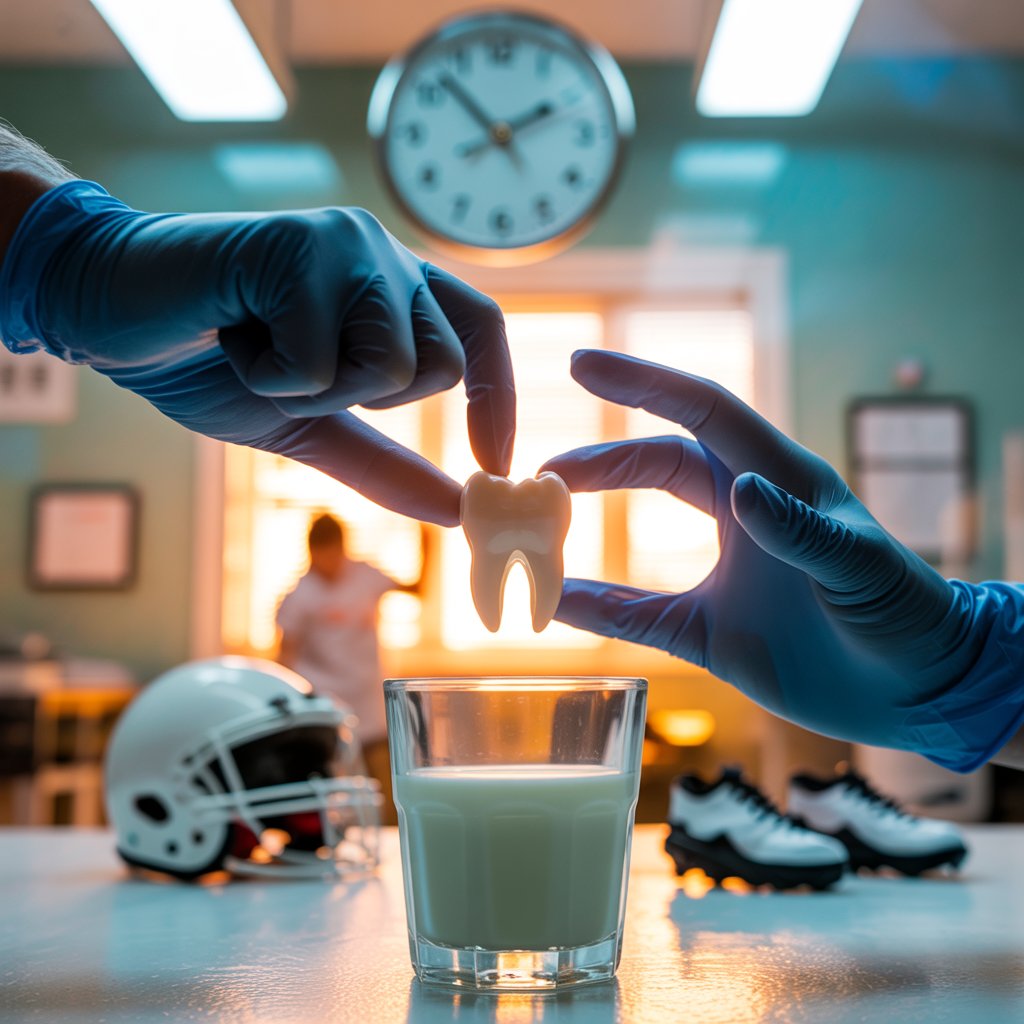
- Save any broken tooth fragment in milk, saline, or a clean container.
- If a permanent tooth is knocked out, hold it by the crown, not the root, and seek care immediately.
That advice sounds simple, but people in pain often do the opposite. They scrub a dirty tooth, handle the root, or leave a broken piece wrapped in tissue on a car seat. In practice, many emergency dentists spend part of the visit undoing well-meant first aid. A front tooth fragment that has dried out may still be useful for shade matching, but one kept moist has a better chance of being reattached if the fracture pattern allows it.
Children add another layer of complexity. If the injured front tooth is a baby tooth, management can be very different from an adult tooth. Reimplanting a knocked-out baby tooth is generally avoided because of the risk to the developing permanent tooth underneath. Parents are often surprised by that. The instinct is to “put it back,” but pediatric dental trauma follows its own rules.
What the dentist looks for as soon as you arrive
In the treatment room, the exam starts with questions that may seem unrelated to the tooth itself. How long ago did the injury happen? Was there any loss of consciousness? Is the bite different? Are the teeth sensitive to air, cold, or pressure? Did the patient find any tooth fragments? Trauma to the front teeth can be part of a broader facial injury, so a good emergency dentist does not focus only on the obvious chip.
The exam itself is methodical. The dentist checks the lips, cheeks, and gums for cuts, sometimes because tooth fragments are embedded in soft tissue. They evaluate whether the injured tooth is mobile, displaced, intruded into the bone, or tender to touch. They also assess the neighboring teeth. A patient may only complain about one front tooth, yet the teeth next to it may have concussion-type injuries that become symptomatic later.
X-rays are essential. Sometimes more than one type is needed. A fracture can run horizontally across the crown, vertically into the root, or diagonally below the gumline where it is not visible to the eye. The plan changes with each of those findings. A small chip can be repaired in one visit. A root fracture may require splinting, monitoring, or in some cases extraction if the damage is severe.
Pulp testing, which helps assess whether the nerve inside the tooth is alive and responsive, is helpful but not always definitive on the day of injury. A traumatized tooth can test negative at first and recover later, or it can test normally and deteriorate over time. That is one reason follow-up matters so much after front tooth trauma. The emergency visit handles the immediate problem, but the story of the tooth is not always finished that day.
Chipped front teeth, the injury people tend to underestimate
The most common front tooth injury is a chip. Patients often call it “just cosmetic,” but the size and depth of the chip matter. If the fracture is limited to enamel, treatment may be as straightforward as polishing a rough edge or adding tooth-colored bonding. These repairs are usually conservative and can look excellent when done carefully.
Once dentin is exposed, the stakes change. Dentin is the layer under enamel, and it is more porous and more sensitive. Air, cold drinks, and even breathing through the mouth can trigger pain. In those cases, sealing the exposed area quickly is important, even if the final contouring and artistic refinements happen later. The immediate goal is protection.
If the fracture reaches the pulp, the inner tissue that contains nerves and blood vessels, treatment depends on age, symptoms, and how soon the patient presents. In younger patients with immature teeth, preserving the vitality of the pulp is especially valuable because the root may still be developing. In adults, a larger pulp exposure after trauma may push the treatment plan toward root canal therapy followed by restoration. That decision is not made casually. Front teeth should be kept as biologically intact as possible, but they also need to be predictable.
One detail patients appreciate hearing plainly is that not every chipped tooth needs a crown. Crowns have an important role, especially when there is extensive loss of tooth structure, repeated fracture, or endodontic treatment that weakens the remaining tooth. But many front tooth chips are best managed with direct bonding or fragment reattachment because those options preserve more natural enamel.
When a front tooth is cracked, the question is where the crack goes
Cracks create some of the most difficult emergency decisions. A superficial craze line in enamel may require no treatment beyond documentation and monitoring. A deeper crack that changes the way the tooth flexes under pressure is another matter entirely. The problem is not just the visible line. It is the path of the fracture through the tooth.
A crack confined to the crown can often be restored successfully, depending on the amount of healthy structure left. If the crack extends below the gumline, the prognosis worsens. A crack that reaches the root can compromise the attachment around the tooth and invite bacterial contamination in places that are hard or impossible to seal long-term. In those cases, emergency treatment may focus on stabilizing the area, easing discomfort, and discussing realistic next steps rather than promising a quick cosmetic fix.
Patients often ask whether a cracked front tooth can simply be bonded shut. Sometimes it can be reinforced with bonding or restored with a veneer or crown after careful evaluation. Sometimes the crack pattern makes any restoration a short-term measure at best. A responsible emergency dentist in Plano, TX will explain that distinction instead of chasing a pretty result that fails months later.
Teeth that have moved, loosened, or shifted need fast stabilization
A front tooth does not have to break to be seriously injured. It may be pushed backward, forward, or sideways. It may be driven upward into the socket. It may feel loose or “high” when the patient bites. These injuries affect the periodontal ligament and sometimes the surrounding bone. Timing matters.
If a tooth has been displaced but is still in the mouth, the dentist may reposition it and stabilize it with a splint. In practical terms, that often means using a bonded flexible support that attaches the injured tooth to neighboring teeth for a short period while the ligament heals. The exact splinting time depends on the type of injury. A mildly loosened tooth and a more complex luxation injury are not treated the same way.
The bite also matters. Even a beautifully repositioned tooth can fail if it keeps taking heavy pressure every time the patient closes. Small bite adjustments are sometimes part of the emergency visit, especially when the tooth has shifted enough to contact prematurely.
There is often bruising, bleeding from the gumline, and tenderness that makes patients fear they have lost the tooth. Some of these cases do better than expected if they are treated promptly. Others develop nerve damage later and require root canal treatment after the tooth has been stabilized. That uncertainty is part of trauma care. Dentists manage what they can see today while watching for delayed changes in the weeks ahead.
A knocked-out front tooth is the true dental emergency
Among front tooth injuries, avulsion, meaning a tooth is completely knocked out, is the most time-sensitive. The goal is to preserve the viability of cells on the root surface and return the tooth to the socket as quickly as possible. Permanent teeth have the best chance when reimplanted promptly and handled properly. Baby teeth are different and are generally not replanted.
When an adult or older child arrives with a knocked-out permanent front tooth, the dentist will inspect the tooth, the socket, and the surrounding tissues, then reimplant if appropriate. The tooth is usually splinted afterward, and the patient is given detailed instructions on diet, hygiene, and follow-up. Root canal treatment is often needed in the weeks after reimplantation, particularly for fully developed teeth.
The public often imagines this is a guaranteed save if it happens fast enough. It is not that simple. Time out of the mouth matters, but so do storage conditions, contamination, root maturity, and damage to the socket. Even with ideal care, a replanted tooth may later develop root resorption or ankylosis. Still, immediate action gives the best chance, and that chance is worth pursuing.
This is where local access matters. If someone needs an emergency dentist in Plano, TX after a sports injury or fall, every minute spent waiting, searching, or assuming the problem can wait until morning may narrow the options.
Repairing the appearance without compromising the biology
Once the tooth is protected and the diagnosis is clearer, the conversation shifts to restoration. Front teeth are visible in speech, photos, work meetings, and every social interaction, so aesthetics cannot be treated as an afterthought. But appearance should be rebuilt on a stable foundation.
Composite bonding is often the first choice for modest chips and edge fractures. It is conservative, can usually be completed quickly, and allows the dentist to sculpt shape and translucency directly. The best bonding is not just white material placed on a broken edge. It mimics how natural enamel catches light, how the edge fades slightly, and how the tooth relates to the one beside it. This is one reason trauma cases can look easy from the waiting room and still demand real artistry in the chair.
If the original fragment is available and fits well, reattachment may be an excellent option. It preserves natural tooth anatomy in a way no material can replicate perfectly. The success of reattachment depends on fracture design, hydration of the fragment, and whether the break line allows adequate bonding. It is not always possible, but when it works, patients are often astonished by how natural the result looks.
Larger fractures may call for veneers or crowns once the tooth has declared itself stable. Dentists are usually cautious about rushing into definitive cosmetic work immediately after trauma, especially if the pulp status is uncertain or the gum tissues are bruised and swollen. A tooth that looks settled at 48 hours can change color or become non-vital later. Sometimes the right sequence is a protective interim repair first, then the final esthetic restoration after healing has progressed.
Root canals are not the enemy, but they are not automatic either
Few phrases alarm patients like “you may need a root canal.” Front tooth injuries are one of the common paths to that conversation, but emergency dentists do not recommend root canal treatment by reflex. They recommend it when the nerve has been irreversibly damaged, infected, or exposed in a way unlikely to recover.
One challenge in trauma cases is timing. A severely injured tooth may look normal in color and still lose vitality over days or weeks. Another may test poorly at the first visit and recover. Dentists rely on a combination of symptoms, clinical findings, X-rays, pulp testing, and follow-up trends rather than a single snapshot.
For front teeth, root canal treatment can preserve a tooth that would otherwise be lost. That matters aesthetically and functionally. Yet a root canal-treated front tooth may darken over time, become more brittle if a lot of structure is missing, or eventually need internal bleaching, bonding, or a crown for appearance and strength. Those are manageable issues, but patients deserve to understand the trade-offs from the start.
Soft tissue injuries often travel with tooth trauma
A front tooth injury rarely occurs in isolation. The lip may be split, the gum lacerated, or the inside of the cheek bruised and swollen. It is easy for patients to overlook these injuries because the tooth draws all the attention, but they can affect treatment choices. A cut lip may hide a tooth fragment. A torn gumline can change the appearance of the smile even after the tooth itself is repaired. Sometimes a patient needs dental care and medical evaluation, particularly if facial trauma is significant.
Emergency dentists clean these areas carefully, assess whether sutures are needed, and look for signs that the injury extends beyond the mouth. If there is concern for jaw fracture, severe head injury, or uncontrolled bleeding, the dentist may coordinate with an emergency room or oral surgeon. Good emergency dental care knows its lane and knows when another level of care is necessary.
What recovery looks like over the next few weeks
The first repair is not the final chapter. Trauma follow-up is where many important decisions happen. A tooth that was merely tender may calm down completely. A repositioned tooth may firm up. A root that looked intact may later show changes on X-ray. Gum tissues may shrink or rebound. Color changes may develop slowly.
Patients are often surprised by how structured the monitoring can be. Depending on the injury, the dentist may want reevaluation within days, then weeks, then months. That schedule is not overcautious. It is how hidden complications are caught before they become bigger problems.
Dentists usually ask patients to be alert for a handful of changes after treatment:
- Increasing pain or throbbing rather than steady improvement
- Darkening of the tooth compared with the neighbor Emergency dentist Plano, TX
- Swelling, pimple-like bumps on the gum, or bad taste
- A bite that still feels off after the initial soreness should have eased
- New looseness or sensitivity to tapping
These signs do not always mean the tooth is failing, but they do justify prompt reassessment. Front teeth can remain salvageable if changes are caught early.
Why treatment decisions are rarely one-size-fits-all
The public often searches for a single answer, usually something like “How do dentists fix a broken front tooth?” In practice, the answer depends on age, root development, amount of remaining enamel, bite forces, the patient’s smile line, and whether the injury happened an hour ago or three days ago.
A college athlete with a clean enamel-dentin fracture may do beautifully with bonded repair and a mouthguard moving forward. A middle-aged patient with a displaced front tooth, deep crack, and heavy bite may need stabilization first, then root canal therapy, then a crown or implant discussion if the prognosis declines. A child with trauma to a developing permanent tooth may need conservative care and long observation rather than aggressive intervention.
Experience matters here. An emergency dentist who regularly treats trauma learns to read the details that shape prognosis. They know when to preserve, when to stabilize, when to defer final esthetics, and when honesty is kinder than optimism.
The practical side of preventing the next injury
After a front tooth trauma, prevention stops sounding like generic advice. Patients who have lived through one broken incisor are usually motivated to avoid a repeat. For athletes, custom mouthguards make a real difference and are far more wearable than the boil-and-bite versions people abandon in gym bags. For patients who clench or grind, a night guard may protect repaired front teeth from repeated stress. If a prior restoration has changed the bite even slightly, that deserves attention too.
There is also a behavioral side that rarely gets mentioned. Many adult front tooth injuries happen not in contact sports but in ordinary moments, tripping while carrying boxes, slipping near pools, opening things with the teeth, or walking dogs that lunge unexpectedly. Prevention is not glamorous, but neither is repairing a fractured front tooth before a wedding or job interview.
When prompt care makes the biggest difference
The common thread in all of this is time, but not in the exaggerated sense people sometimes assume. Not every chip is a race against the clock. A small enamel nick can often wait a short time without changing the long-term result. The situations that demand speed are deeper fractures with pain, teeth that have shifted, signs of nerve or root involvement, uncontrolled bleeding, and especially teeth that are completely knocked out.
For anyone facing that kind of injury, seeing an emergency dentist in Plano, TX quickly can mean the difference between a straightforward repair and a much more complex reconstruction. The visible part of the tooth is only one piece of the injury. The goal is to save structure, protect vitality when possible, restore appearance intelligently, and give the tooth its best chance to stay healthy long after the initial shock wears off.
Front tooth trauma feels dramatic because it is dramatic. It affects speech, eating, confidence, and comfort all at once. The good news is that modern emergency dental care offers strong options for many of these injuries, especially when treatment is prompt and the plan is shaped by careful diagnosis rather than guesswork.
Vitality Dental
1220 Coit Rd # 106, Plano, TX 75075, United States
+1 972-645-4100
FAQ About Emergency dentist Plano, TX
Will the ER do anything for dental pain?
An emergency department can assess urgent symptoms and provide medical stabilization. Definitive treatment of the tooth usually requires a dentist. Seek emergency medical care for breathing or swallowing difficulty, uncontrolled bleeding, or serious facial injury.
What to do if I have a dental emergency in the middle of the night?
Contact a dentist or after-hours dental service promptly for guidance. If a permanent tooth is knocked out, keep it moist in milk while seeking immediate care. If symptoms suggest a medical emergency, go to an emergency department.
What qualifies as a dental emergency?
A knocked-out permanent tooth, severe or persistent tooth pain, a significant dental injury, or swelling may require urgent dental assessment. Call a dentist to describe the symptoms and determine timing. Uncontrolled bleeding or difficulty breathing or swallowing requires emergency medical care.
❧